NAD+ and Mitochondrial Signaling: What Recent Preclinical Research Reveals
NAD+ has emerged as one of the most actively researched coenzymes in modern biochemistry. This article examines the growing body of preclinical research exploring NAD+ involvement in mitochondrial function, sirtuin-mediated signaling, and cellular energy metabolism.
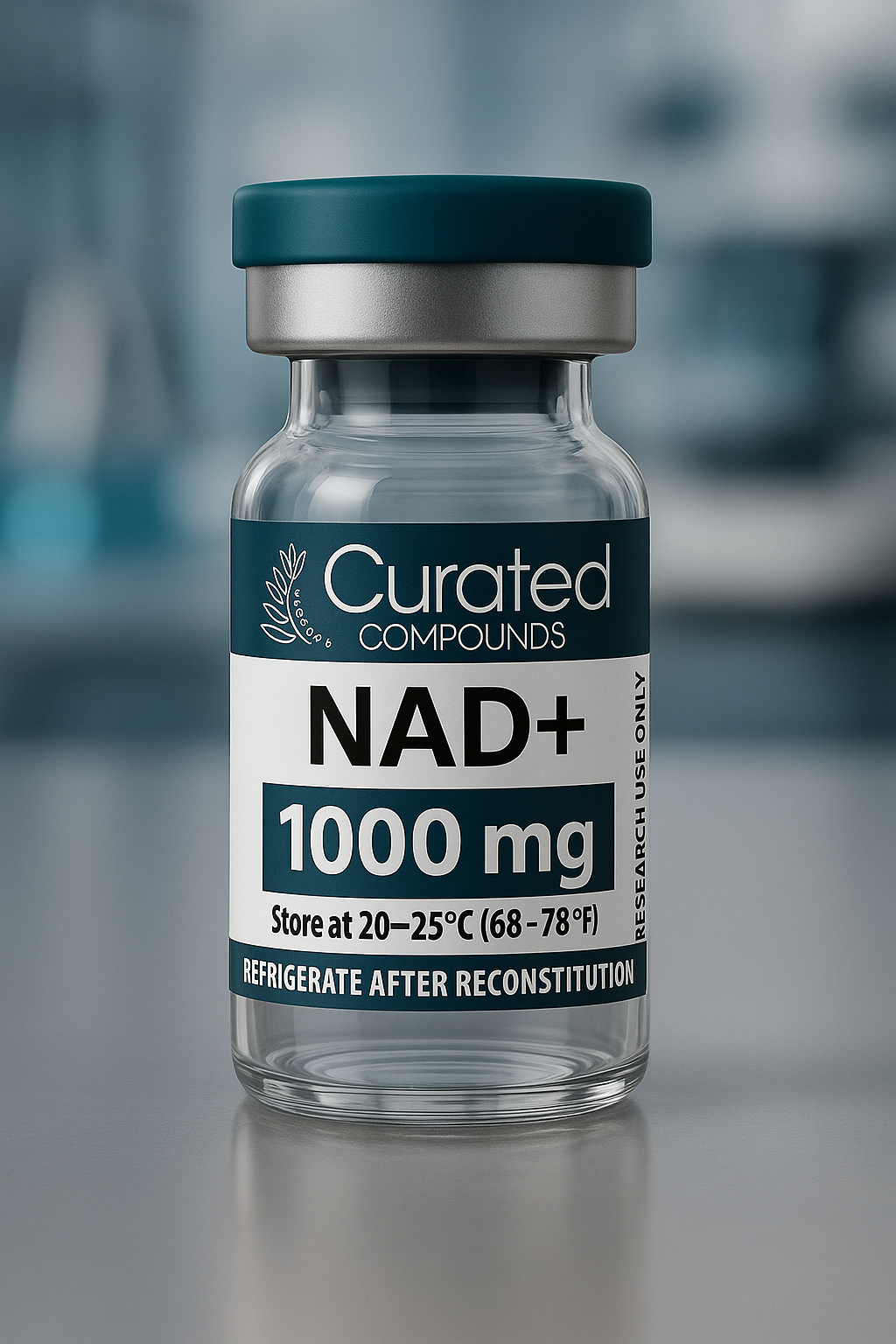
The NAD+ Research Landscape Nicotinamide adenine dinucleotide (NAD+) is a coenzyme found in every living cell. It participates in hundreds of metabolic reactions, serving as a critical electron carrier in oxidative phosphorylation and as a substrate for enzymes involved in DNA repair, gene expression, and cellular signaling [4]. Over the past two decades, NAD+ has become one of the most intensively studied molecules in biochemistry and aging research [4]. What makes NAD+ particularly interesting to the research community is the growing body of evidence — primarily from preclinical models — suggesting that cellular NAD+ levels decline with age and under conditions of metabolic stress [4]. This observation has fueled extensive investigation into the functional consequences of NAD+ depletion and the biochemical pathways through which NAD+ exerts its cellular effects. Mitochondrial Energy Metabolism At its most fundamental level, NAD+ functions as a coenzyme in the mitochondrial electron transport chain, facilitating the transfer of electrons during oxidative phosphorylation. This process is responsible for generating the majority of cellular ATP — the energy currency of the cell. Preclinical research has investigated how changes in NAD+ availability affect mitochondrial function [6]. Studies in cell culture and animal models have examined the relationship between NAD+ levels and mitochondrial membrane potential, oxygen consumption rates, and ATP production efficiency [6]. These investigations have contributed to our understanding of how metabolic cofactors influence cellular energy balance. Sirtuin-Mediated Signaling Pathways One of the most significant discoveries in NAD+ biology has been its role as the obligate substrate for sirtuins — a family of NAD+-dependent deacylase enzymes. Seven mammalian sirtuins (SIRT1-7) have been identified, each with distinct subcellular localization and substrate specificity. Preclinical studies have investigated how sirtuin activation — which is directly dependent on NAD+ availability — influences chromatin remodeling, mitochondrial biogenesis, inflammatory signaling, and cellular stress responses [3]. SIRT1 and SIRT3 have received particular attention in laboratory models examining metabolic regulation and mitochondrial function. It is important to note that while these sirtuin-NAD+ interactions have been well-characterized in preclinical systems, the translation of these findings to human biology remains an active area of investigation. DNA Repair and PARP Enzymes NAD+ also serves as a substrate for poly(ADP-ribose) polymerases (PARPs), enzymes that play essential roles in detecting and repairing DNA damage. PARP1, the most abundant family member, consumes NAD+ to synthesize poly(ADP-ribose) chains that recruit repair machinery to sites of DNA breaks. Laboratory research has explored how NAD+ availability affects PARP activity and, by extension, the cell's capacity to maintain genomic integrity [4]. Under conditions of extensive DNA damage, PARP hyperactivation can deplete cellular NAD+ pools, creating a competition for NAD+ between repair pathways and metabolic processes. This interplay has been studied in various preclinical models to better understand cellular responses to genotoxic stress. NAD+ in Aging Research Models The observation that NAD+ levels decline in aging tissues across multiple preclinical models has generated significant research interest [4]. Studies have examined NAD+ dynamics in aging models to understand how this decline correlates with changes in mitochondrial function, inflammatory signaling, and cellular senescence markers [4]. Research models have investigated whether maintaining NAD+ levels in laboratory systems affects markers associated with cellular aging, including mitochondrial membrane potential, reactive oxygen species production, and senescence-associated secretory phenotype (SASP) factor expression [4]. These studies continue to refine our understanding of NAD+ biology in the context of cellular aging processes. Immune Function Research Emerging preclinical research has also explored NAD+ involvement in immune cell function [6]. Laboratory studies have investigated how NAD+ availability affects macrophage polarization, T-cell metabolism, and inflammatory cytokine production. These investigations suggest that NAD+-dependent pathways may influence immune cell energy metabolism and functional responses, though this remains an active area of preclinical characterization. Research Considerations For researchers working with NAD+ in laboratory settings, compound quality and handling are critical variables. NAD+ is sensitive to light, temperature, and moisture, and improper storage can lead to degradation that affects experimental outcomes. Lyophilized preparations stored in cool, dry, light-protected conditions maintain optimal stability for research applications. As with all research compounds, verified purity through comprehensive third-party testing ensures that experimental results reflect the activity of the target molecule rather than contaminants or degradation products. Disclaimer: This article is for educational and informational purposes only. All compounds discussed are intended for in-vitro research and laboratory use only. They are not intended for human or animal use, consumption, or application. Nothing in this article constitutes research information only, research information only (not a diagnostic tool), or has been studied in research for its effects on recommendations. References Yang Q, Chen W, Cong L et al. NADase CD38 is a key determinant of ovarian aging. Journal of Biological Chemistry , 2023. PMID: 38129670 . Baixauli F, Piletic K, Puleston DJ et al. An LKB1-mitochondria axis controls T(H)17 effector function. Nature Immunology , 2022. PMID: 36171294 . Shen H, Qi X, Hu Y et al. Targeting sirtuins for cancer research application: epigenetics modifications and beyond. Cancer Research , 2023. PMID: 39479446 .